



Discover Parks & Wildlife contains affiliate links and is a member of the Amazon Services LLC Associates Program. If you make a purchase using one of the Amazon links (or other affiliate links), we may receive compensation at no extra cost to you. See our disclosure policy for more information.
Is Beer An Acquired Taste? & How You Can Acquire It
Is Beer An Acquired Taste? Time to find out!
As seasoned globetrotters with a penchant for the fermented arts, we’ve hopped across continents, visiting countless breweries to answer the age-old question, “Is beer considered an acquired taste?”
Strap in because it’s time to pour into this frothy debate!
From the giddy sours to the tantalizing gose, our taste buds have danced with a myriad of ales, all while politely declining the advances of IPAs and pale ales (they’re just not our type).
We’ve brewed up this guide not just from the love of a good pint but from countless tasting tours and endless beer banter with fellow brewery goers.
Now, we’re no beer whisperers, but we’ve mastered the ale-phabet, so to speak.
So, if you’re wondering whether to begin on your journey to acquire the taste of beer, you’re in good company.
Trust us, it’s a beer-illiant adventure!
Is Beer An Acquired Taste
Indeed, beer is often considered an acquired taste.
The complex blend of bitterness, fizz, and a multitude of flavor profiles can be somewhat off-putting to the uninitiated palate.
But much like coffee or spicy food, with exposure and experience, one can learn to appreciate and even savor the unique taste of beer.
It’s a journey of flavor exploration that, given time and patience, can lead to a wonderful appreciation for this age-old, frothy brew.
But remember, everyone’s taste is unique, so your beer adventure is truly your own!
What Is An “Acquired Taste” Anyway
What is this elusive concept of an ‘acquired taste’ anyway?
Picture this: You’re a kid, and your first encounter with the tangy twist of a lemon or the bitterness of dark chocolate sends your taste buds into a frenzy of rejection.
Fast forward a few years, and you’re popping lemon slices into your water and savoring the richness of dark chocolate. That’s an acquired taste!
An acquired taste isn’t something you’re born liking.
It’s the gastronomic equivalent of learning to ride a bike or appreciate abstract art. It’s complex, a little mysterious, and entirely individual.
Acquiring a taste for something doesn’t just broaden your food and drink options; it’s also a testament to your evolving palate.
It’s proof that our preferences aren’t static but are instead on a deliciously dynamic journey of discovery.
How Our Tastes Evolve
Have you ever wondered how our taste buds go from “Gimme that candy!” as kids to “Pass the blue cheese, please!” as adults?
Let’s chew on that for a bit.
Believe it or not, when we’re fresh out of the oven, we’re hardwired to go gaga for sweet stuff. Yes, babies are bonkers for bonbons, not just because they’re tooth-achingly adorable!
These sweet cravings are Mother Nature’s way of steering us towards nourishing, high-energy foods.
But as we graduate from bibs to business suits, our tastes mature too.
We start flirting with flavors that aren’t just sweet but savory, sour, spicy, and sometimes, even outright strange (who thought of eating oysters anyway?).
So let’s unravel the science and silliness behind our ever-evolving tastes, and how environment and experience play a factor.
Warning: it’s going to be tastier than a teething biscuit!

Environment
There’s a world of flavor out there, and the shifts in our tastes are not just random tastebud tantrums. They are deeply intertwined with our environment.
Yes, you heard that right!
Your environment has a role juicier than a well-cooked steak in shaping your tastes.
Think back to your childhood. The meals shared around your family table, the snacks your school friends introduced you to, and even the scents wafting from your neighbor’s kitchen all played a part in developing your early flavor preferences.
That nostalgic love for mom’s apple pie or a cultural affinity for grandma’s tamales? That’s environment talking!
As we venture into the world, our tastes continue to evolve.
We try new foods, experience different cultures, and our palate becomes a melting pot of flavors.
Ever noticed how a trip to Italy might have left you craving authentic pizza or pasta? Or how your coworker’s love for Thai food rubbed off on you over shared lunch breaks? That’s your ever-changing environment, gently nudging your tastebuds.
In this ever-connected world, we’re exposed to a global smorgasbord of culinary delights.
From swapping recipes over social media to trying out the latest food trends, we’re continually broadening our flavor horizons.
Heck, even binge-watching food travelogues might make us crave flavors we’ve never even tasted!
So, friends, let’s appreciate the role our environments play in our gastronomic journeys.
They push us out of our culinary comfort zones, encourage us to embrace new food experiences, and, most importantly, make our lives a delicious adventure.
Experience
Ever bitten into a dish and instantly been transported back to a memory?
Like the taste of a freshly baked pie that reminds you of grandma’s kitchen or the whiff of a particular spice that takes you back to a childhood vacation?
That’s your past experiences subtly influencing your current tastes.
Think about it. Every bite we take, every meal we share, contributes to our personal flavor library. They leave an imprint.
That time you tasted an olive for the first time and found it too bitter? It’s probably making you think twice before trying that olive tapenade your friend recommended.
Our taste evolution isn’t just about exploring new flavors.
It’s a roller coaster ride, with moments of pure delight (remember your first bite of your favorite ice cream?), surprise (who knew durian could be so divisive?), and sometimes, disappointment (we’re looking at you, overhyped restaurant!).
These experiences mold our preferences, making us more eager or cautious in our culinary experiments.
But hey, here’s the fun part. Tastes can change.
What was once too bitter, spicy, or weird could become your next favorite food. Maybe you just need to try it prepared differently or pair it with something you enjoy.

Why Beer Is Considered An Acquired Taste
Now that we have answered, “Is beer an acquired taste,” it’s time to take a suds-soaked journey into why beer is less like love at first sip and more of a brew-mance that grows over time!
Bitterness
Let’s crack open a topic that’s been bubbling up in beer conversations – the ‘bitter’ truth about why beer is considered an acquired taste.
Firstly, a quick refresher.
Remember how we’re hardwired to enjoy sweet things? It’s a survival instinct dating back to our cave-dwelling days when sweet meant ripe, safe-to-eat fruits and high energy.
Bitterness, on the other hand, is nature’s caution sign, often associated with toxins or poisons. Talk about a prehistoric PR problem!
So, how does this all relate to beer? Enter the IBU or International Bitterness Units.
This little number, often found on your beer label, measures the parts per million of isohumulone – the chemical compound that gives beer its bitter taste.
It’s derived from hops, the pinecone-like flowers that are beer’s backbone.
The higher the IBU, the more the bitterness, and the more likely your tongue might do a double take on the first sip.
But wait, before you write off bitter beers, remember that acquiring a taste for them is like training for a marathon. You wouldn’t expect to run a full marathon on day one, would you?
Similarly, diving into a high IBU beer headfirst might leave you with a bitter experience.
Instead, starting slow with lower IBU beers and gradually working your way up can make all the difference.
Moreover, bitterness in beer isn’t a one-note wonder.
It adds balance, complexity, and character. It’s the yin to the malt’s sweet yang, the rhythm to the beer’s boozy melody.
And who knows, as you continue your beer journey, you might find yourself enjoying the zing that a hop-loaded IPA or a crisp pilsner brings to your palate.
After all, beer tasting is an adventure, and bitterness? It’s just a part of the thrill!
Alcohol Content
Pop a top and pull up a chair because we’re about to delve into the role that alcohol content plays in our beer-sipping saga.
If you’ve ever asked yourself, “What on earth does ABV mean, and why does it matter?” then you’re in the right place!
ABV, or Alcohol By Volume, is the little percentage you see on your beer label. It tells you how much of your beer is, well, pure alcohol.
But beyond just letting us know how tipsy we might get, ABV is also a crucial actor in the beer flavor play.
Picture this – you sip a low-ABV lager, then follow it with a hearty swig of a high-ABV stout.
Notice the difference?
The stout probably tasted richer, more robust, and maybe even sweeter.
That’s because as the alcohol content rises, it can intensify certain flavors and add a warming sensation to the drink. And not just that, it even affects the beer’s mouthfeel, making it feel fuller on the palate.
However, with great power (read: high ABV) comes great responsibility!
Higher alcohol content in beers can also introduce stronger, more potent flavors that may seem a bit much to the untrained palate, making them an acquired taste.
They’re like the spicy hot wings of the beer world!
But worry not, friends! Acquiring a taste for higher ABV beers is a delightful journey of discovery.
Start slow, savor each sip, and give your palate time to adjust and appreciate the complex symphony of flavors.
Who knows, that high-ABV Belgian Tripel might just become your next go-to brew.

It tastes Like Nothing Else
Have you ever sipped on a beer and thought, “Wow, this doesn’t taste like anything else I’ve had!”?
Due to its glorious variety, beer is often considered an acquired taste because it tastes like nothing else!
Think about it. There aren’t many beverages out there that can offer the dizzying diversity that beer does.
From the crisp, light lagers to the dark, malty stouts and the dizzyingly sour lambics to the intensely hoppy IPAs – each beer is a unique blend of flavors. This individual personality marches to its own beat.
And within this broad spectrum, you’ll find brews that taste like bread, others that remind you of tropical fruit, some that carry a whiff of banana and cloves, and even those with the bitter tang of coffee or chocolate.
The cornucopia of flavors found in beer is as vast as it is wild!
The thing is, such diversity can be both exciting and overwhelming.
Exciting because there’s always a new taste to discover, and overwhelming because, well, where do you start? Not to mention that these flavors can be quite intense, unlike what we’re used to in our daily beverages.
Coffee doesn’t taste like tea, and soda doesn’t taste like fruit juice. In the same way, beer is in a league of its own.
Acquiring a taste for beer is like learning a new language – it takes time, practice, and a bit of patience.
It’s about training your palate to understand and appreciate the complex symphony of flavors that beer brings to the table.
But once you get the hang of it, a world of delicious discovery awaits!
Do People Drink Beer Because They Like The Taste
Do people drink beer because they like the taste?
Well, in short, yes! But let’s delve a bit deeper, shall we?
Beer enthusiasts often say they love beer’s diverse range of flavors (and it’s amazing health benefits!).
You see, beer isn’t just one taste. It’s a complex bouquet of flavors – from bitter to sweet, fruity to spicy, and everything in between.
Some people might be drawn to a light lager’s crisp, refreshing taste, while others may prefer the rich, robust flavors of a dark stout.
That being said, the beer-drinking experience is about more than taste.
For some, it’s about the ritual – cracking open a cold one after a long day or sharing a round with friends at a bar. For others, it’s the sense of adventure that comes with exploring different brews from around the world.
Of course, let’s not forget that beer contains alcohol; for some, the buzz that comes with moderate consumption might also be a factor.
So, while the taste is definitely the main driving factor, the beer-drinking experience is a rich tapestry woven from threads of flavor, culture, camaraderie, and personal preference.

How Do You Start Liking The Taste Of Beer
Ever caught yourself saying, “I don’t like beer,” only to be met with gasps of disbelief?
Fret not; the following tips will take you on a frothy journey to transform that ‘beer-not’ into a ‘beer-nut’!
Learn About The Different Types Of Beer & Try New Ones
If you’ve been wearing the “I don’t like beer” badge, it’s time to hang it up and prepare for a brew-tiful adventure.
You see, beer is not a monolith – it’s a vibrant spectrum of styles and tastes.
Saying you don’t like beer is like saying you don’t like music without having explored beyond a single genre.
From light, crisp lagers to hoppy ales, dark roasty stouts to tangy sour beers, a world of flavors is waiting to be discovered!
So, how do you dive in? It’s simple: start with what you know and love.
Are you a fan of something sweet? Try a fruit beer or a honey ale.
Do you savor the robust taste of coffee? A coffee stout or a porter might be your thing.
And for those with a sweet tooth, a chocolate stout might feel like a dessert in a glass!
Over time, as your palate becomes more accustomed to beer’s unique characteristics, you can start exploring further afield.
Perhaps you’ll venture towards the bitter end of the scale with IPAs and pale ales. Or maybe the unusual tang of a sour ale or gose will pique your interest.
Remember, the beer journey is a marathon, not a sprint. You don’t need to go from zero to craft beer enthusiast overnight.
Take your time, savor each sip, and most importantly, enjoy the discovery process.
Drink It At The Right Temperature
As we continue our quest to appreciate beer’s glorious symphony of flavors, let’s talk about an often-overlooked aspect – the temperature.
That’s right, serving beer at the right temperature can make a world of difference to your drinking experience.
Each beer style has its own “Goldilocks” temperature zone, where all its unique flavors and aromas come alive.
Drinking a beer too cold can numb your taste buds and mask the nuances, while too warm can make it taste flat and lifeless.
So, what’s the right temperature?
For lighter beers like lagers and pilsners, cooler temperatures between 38-45°F (3-7°C) work best. These are your typical fridge temperatures, which is why your favorite summer lager is so refreshing straight out of the cooler.
Heavier, more robust beers like stouts and porters, on the other hand, prefer to be enjoyed at ‘cellar temperature’ – around 50-55°F (10-13°C). This allows their complex, rich flavors to really bloom.
And then there are strong, aromatic beers like barleywines and imperial stouts. They’re best savored at even warmer temperatures, around 55-60°F (13-15°C), which helps release their full bouquet of aromas.
Getting the temperature right may require a little effort, but believe us; it’s worth it!
It’s like watching a color TV after years of black and white – you’ll discover nuances you never knew existed.
So next time you pour yourself a beer, remember to pay attention to its temperature.

Drink It In The Right Glass
Just as wine has its goblets and champagne its flutes, beer also finds its voice in the right glassware.
Think about it. You wouldn’t drink a fine wine from a coffee mug, right? (I mean, we would, but we are monsters!)
Similarly, different beer styles are best enjoyed in specific glasses designed to enhance their unique characteristics.
Take the trusty pint glass, for instance – it’s a jack of all trades.
It’s perfect for a wide range of beer styles like IPAs, stouts, and lagers, giving you ample room to take in the aromas while also being sturdy and easy to handle.
Then we have the tall, slender pilsner glasses designed for…you guessed it, pilsners! Their shape helps maintain the beer’s head while showcasing the effervescence and color of your brew.
And let’s not forget beer mugs, the sturdy workhorses of the beer world.
Their thick walls and handles make them ideal for heartier brews and allow for toasts without the fear of breaking.
And that’s just the beginning!
From tulip glasses for your Belgian ales and sours to snifters for your barleywines and imperial stouts, the world of beer glassware is as diverse as the beers they hold.
Drinking beer from the right glass is not just about aesthetics; it’s about enhancing your drinking experience.
It allows the beer to breathe, brings out the aromas, showcases the color, and even affects the formation and retention of the head.
So, the next time you’re about to try a new brew, remember – the right glass can turn a good beer into a great one.
Eat Food With Beer
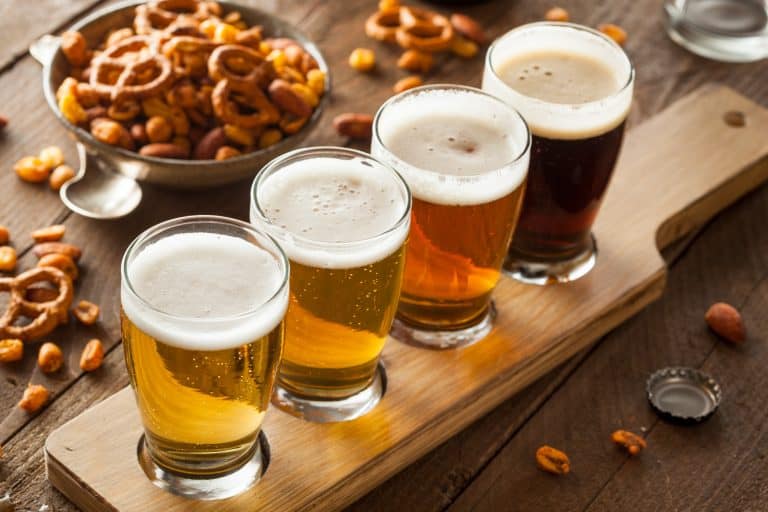
Have you ever wondered why that salty bowl of pretzels at your favorite pub makes your beer taste so much better?
Beer and food have a beautiful symbiotic relationship – they enhance each other.
The right pairing can bring out new flavors in both, creating a downright delicious harmony.
So, this might be your secret weapon if you want to cultivate a taste for beer.
Let’s start with something simple and universally loved – pizza. The greasy goodness of pizza melds seamlessly with the crisp, carbonated refreshment of a lager or pilsner, cleaning your palate between bites.
Or maybe you’re tucking into a juicy burger. An IPA, with its bitter hops, can cut through the fattiness of the meat, complementing the flavors perfectly.
And don’t forget about dessert! A stout’s robust, chocolatey notes can be a heavenly match for a decadent chocolate cake.
But it’s not just about the food but also the experience.
Eating slows your drinking pace and allows you to savor the flavors more.
Of course, there are no hard and fast rules here.
The beauty of beer and food pairing lies in experimentation.
A sharp, tangy goat cheese with a fruity lambic? A spicy Thai curry with a hoppy IPA? The possibilities are endless!
So, let’s raise a toast (and a fork) to the perfect union of beer and food. Cheers!

FAQs About Tasting Beer
Have some questions? Welcome to our sudsy FAQ section all about beer!
Why Is Beer So Addicting?
Can Beer Ruin Your Taste Buds?
Why Is The Last Sip Of Beer Gross?
Is Alcohol An Acquired Taste?

Good To The Last Drop – Is Beer An Acquired Taste
Whether you’re new to the scene or a seasoned ale aficionado, it’s clear that beer is indeed an “acquired taste.”
From sweet beginnings to complex bitters, our palates can evolve and learn to appreciate the frothy delight that beer is.
As we’ve discovered, there’s much more to a pint than meets the eye, or should we say, meets the lips!
So, let’s lift our glasses high and embrace the journey, for every sip brings us closer to cracking the code: is beer an acquired taste?
We say yes, and oh, what a tasty adventure it is!
If you are still a naysayer who refuses to give beer a try, find out why you might be saying “I hate beer,” and how you change it.